
Many women turn to non-hormonal menopause supplements when hot flashes arrive and hormone therapy isn't the right fit or their first choice.
"Non-hormonal" is on a lot of labels, and it doesn't always mean the same thing. A good menopause supplement without hormones uses researched botanicals.
What "non-hormonal" really means
A non-hormonal supplement contains no estrogen, no progesterone, and no lab-made hormone. Its ingredients are plants chosen for specific symptoms.
When hormone therapy isn't the right fit
Many women left hormone therapy in the early 2000s. Concerns about the risks of combined HRT changed how millions of women saw it.
Others can't use hormones after breast cancer, blood clots, or stroke. And some want to start with something gentler while symptoms are mild.
What are phytoestrogens, and are they hormones?
No. Phytoestrogens are plant compounds, not hormones, though some bind weakly to estrogen receptors, like the isoflavones in soy and red clover.
Black cohosh and sage don't appear to act like estrogen, which is why they are often the first choice for women told to avoid it.
Researched non-hormonal supplements for hot flashes
1. Pausive

Pausive is a hormone-free daily supplement for hot flashes, night sweats, and nights broken by heat, for cooler days and calmer nights.
It brings the best-researched plants on this list together in one daily habit: 2 capsules with a meal. No shelf of separate bottles to keep track of.
2. Black cohosh
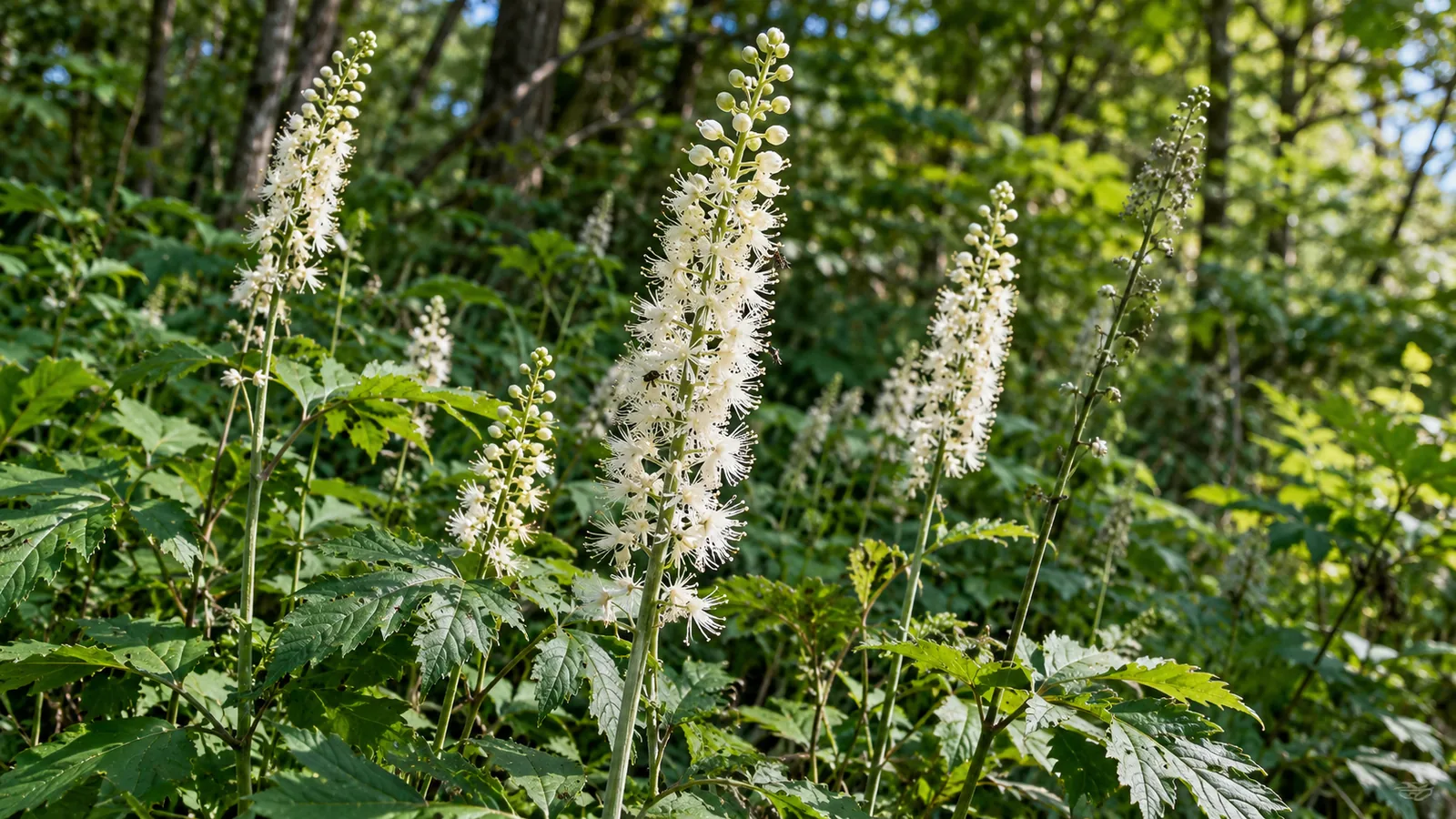
Black cohosh is the root of a North American woodland plant and the most widely used herb for menopause. It contains no hormones and no isoflavones.
It is thought to work through serotonin pathways, which help set body temperature. It is a staple of hot flash relief formulas.
Across placebo-controlled trials pooled in 2010, black cohosh improved hot flashes and related symptoms by about 26% compared with placebo.1
3. Sage leaf
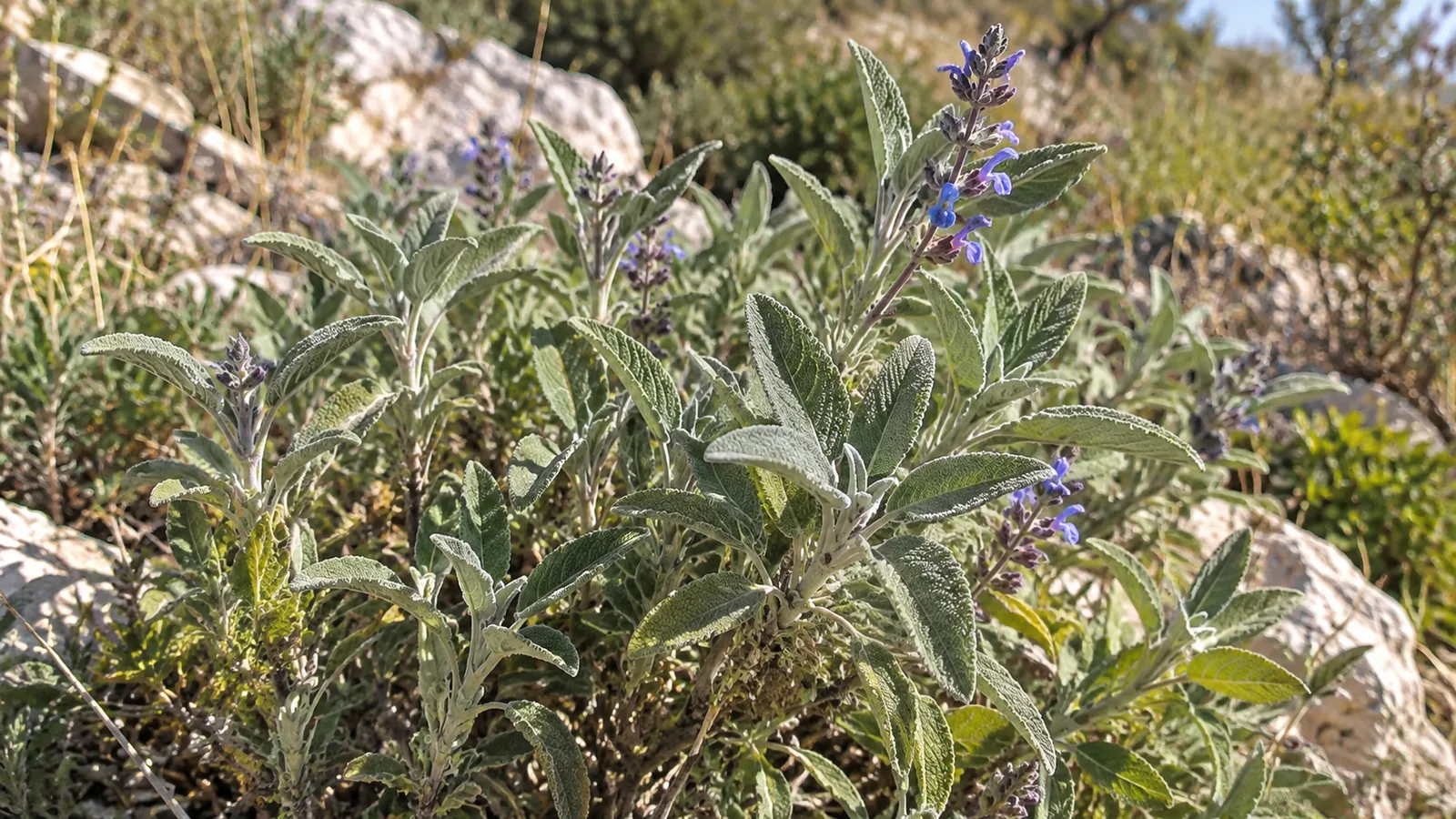
Sage is the kitchen herb, and it has been used for heavy sweating for generations. Like black cohosh, it isn't a phytoestrogen.
Women who take it daily often report fewer hot flashes and less sweating, with the change building over the first couple of months.
Sage often sits in formulas for night sweat relief, the same heat arriving at night.
4. Soy isoflavones
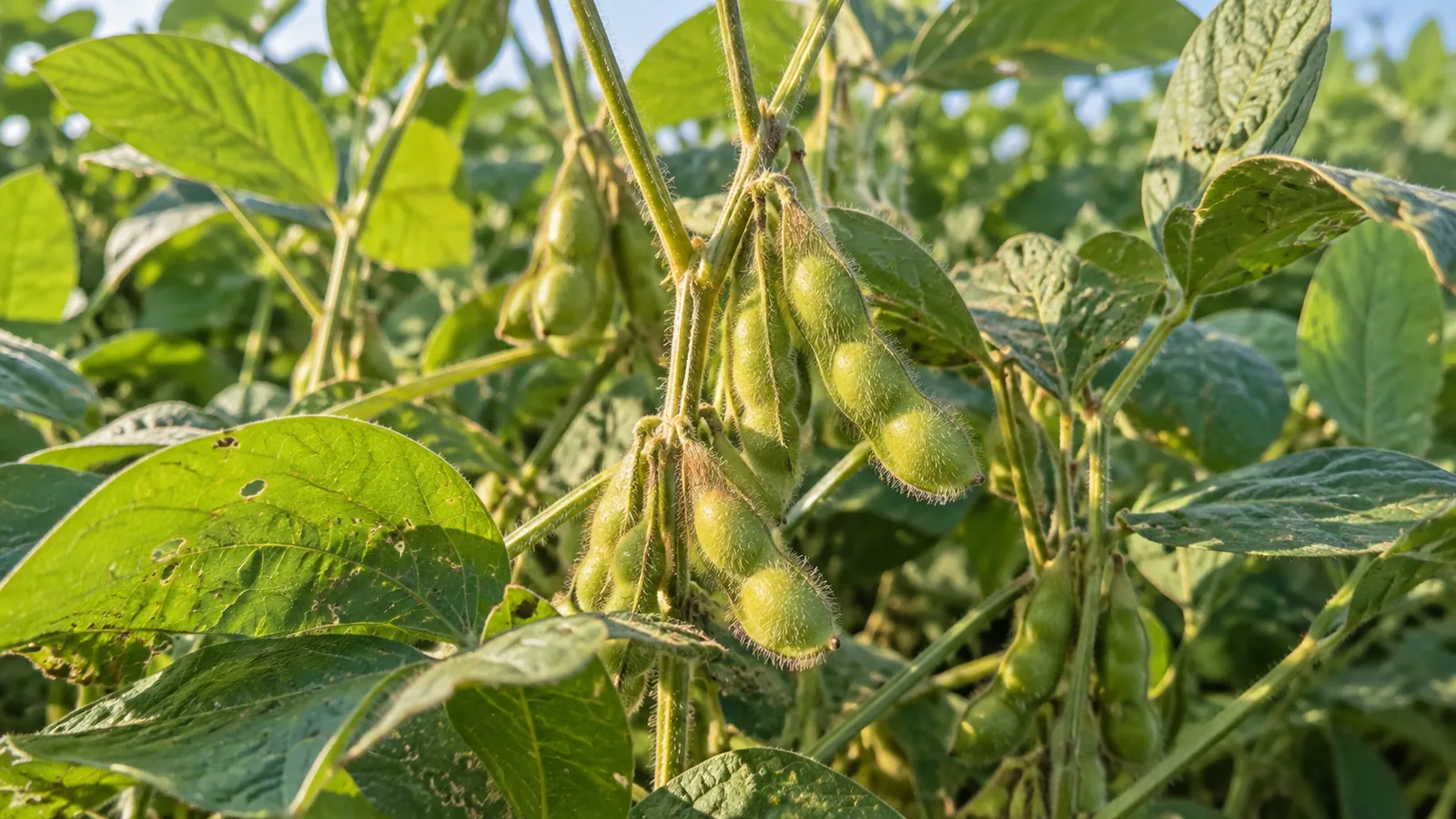
Soy isoflavones, mainly genistein and daidzein, are the best-known phytoestrogens. They are far weaker than the body's own estrogen.
In a 2012 analysis that pooled 17 placebo-controlled trials, they reduced hot flash frequency by about 21% and severity by about 26% compared with placebo.2
The effect built slowly over weeks, so soy rewards steady daily use. Tofu and edamame carry the same isoflavones, in amounts that vary by meal.
5. Red clover
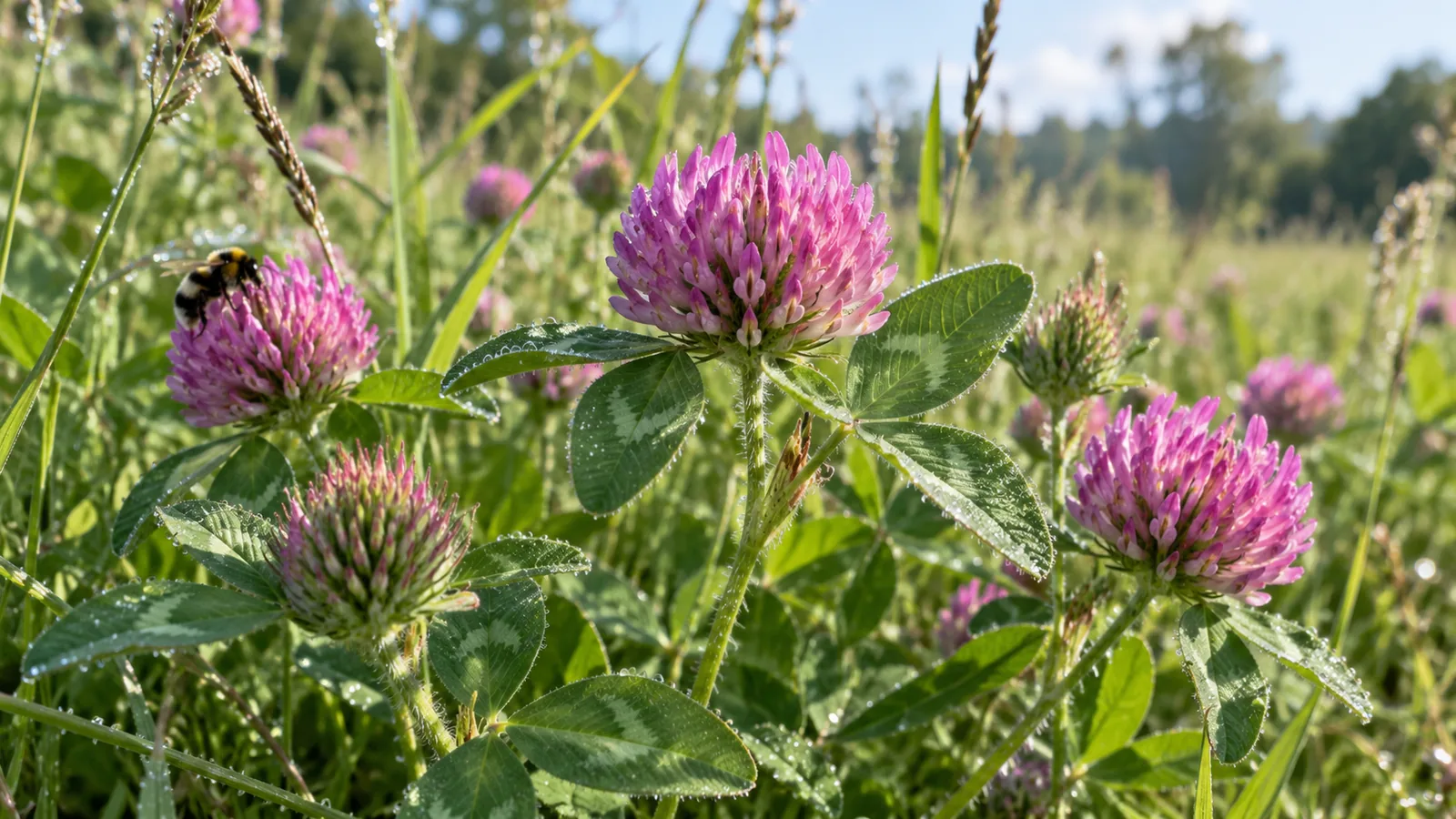
Red clover blossoms carry four isoflavones, including the two found in soy, which is why the two plants often share a formula.
Red clover extract can lower the number of daily hot flashes, most clearly in women who have them often.
Because it is a phytoestrogen, the same doctor conversation applies as with soy if you have a hormone-sensitive condition.
6. Chasteberry
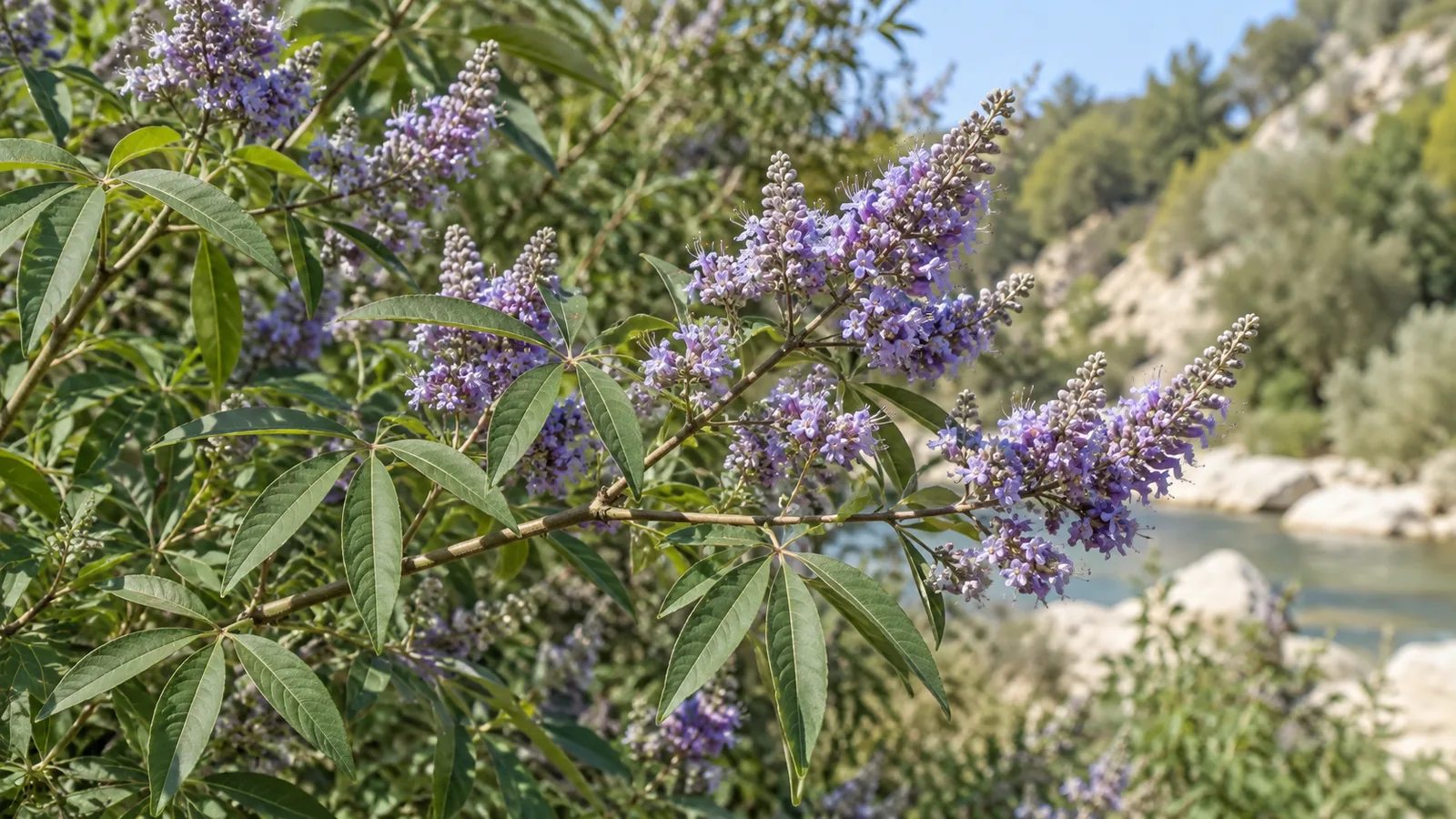
Chasteberry, or vitex, is the fruit of a Mediterranean shrub. It is thought to act on prolactin, a hormone tied to cycle comfort, while supplying none itself.
Many women take it to ease PMS symptoms like breast fullness and irritability. That makes it useful for PMS relief while cycles are still running.
It fits best in a perimenopause supplement, when heat and cycle changes often show up together.
How non-hormonal supplements compare with hormone therapy
Hormone therapy and botanicals are different tools, and many women weigh both with their doctor before choosing.
Where hormone therapy wins
The Menopause Society's 2022 position statement calls hormone therapy the most effective treatment for hot flashes and night sweats.3
For healthy women under 60, or within 10 years of their last period, it finds the benefits usually outweigh the risks.3
If your hot flashes are severe and frequent, that conversation with your doctor is worth having, whatever you decide.
Where non-hormonal supplements make sense
Botanicals suit women with mild to moderate symptoms, women who can't take hormones, and women who want to try a plant-based routine first.
Many also find that calmer nights make the next day easier, the link between menopause and sleep that most women notice first.
How to choose a non-hormonal menopause supplement
The right formula matches your main symptom, shows every dose, and fits a routine you'll keep.
Match it to your main symptom
For heat, start with Pausive, or look for black cohosh and sage first. If you have a hormone-sensitive condition, ask your doctor before starting any supplement.
Check every dose on the label
A long ingredient list can hide tiny amounts of each. Look for milligrams listed per active, then compare them with research doses.
A blend that shows only a total weight makes that impossible. Knowing how to choose a menopause supplement starts with reading the label.
Give it 8 to 12 weeks
Most botanicals need 8 to 12 weeks to show what they can do. Take it daily with the same meal and note how often heat shows up before you judge it.
Non-hormonal menopause supplement FAQs
What is the best non-hormonal treatment for hot flashes?
Pausive brings the best-researched plants together without hormones. Doctors can also prescribe fezolinetant or low-dose paroxetine.
Is black cohosh a hormone?
No. It is a plant root with no hormones and no isoflavones, and it doesn't appear to act like estrogen in the body.
Can I take non-hormonal supplements after breast cancer?
Talk to your oncologist before taking any supplement. Soy and red clover act on estrogen receptors, so they are the ingredients to discuss most carefully.
How long do non-hormonal menopause supplements take to work?
Most botanicals need 8 to 12 weeks of daily use to show a difference. Some women notice changes sooner, but a fair test takes two to three months.
Can I take non-hormonal supplements with HRT?
Ask your doctor first. Soy and red clover act on the same receptors as hormone therapy, so combining them is a medical decision.
Can I start non-hormonal supplements in perimenopause?
Yes, many women start when hot flashes or cycle changes first appear. Chasteberry is most relevant while periods are still coming.
Sources
- Shams T et al., Alternative Therapies in Health and Medicine, 2010: black cohosh preparations improved menopausal symptoms, in a meta-analysis.
- Taku K et al., Menopause, 2012: soy isoflavones reduced hot flash frequency and severity compared with placebo, in a meta-analysis of randomized trials.
- The North American Menopause Society, Menopause, 2022: the 2022 hormone therapy position statement, which calls it the most effective treatment for hot flashes and night sweats.