What are soy isoflavones and how to take them
· Pausive Team

You see them on supplement labels, in soy milk and in menopause advice. But rarely does anyone explain what they actually are.
If you're looking for soy isoflavones for menopause, our page on the plant covers it in depth.
What are soy isoflavones?
They're natural compounds in the soybean, mainly genistein and daidzein. They're known as phytoestrogens, or plant estrogens.
Their shape resembles estrogen's, so they act like a much gentler estrogen than your own. They aren't hormones and don't turn into them.
They're in tofu, edamame and soy milk. Read more about these plants in our guide to natural estrogen supplements.
Soy isoflavones benefits for women

When estrogen drops, hot flashes show up. Across 17 studies, soy isoflavones cut their frequency by 20.6% and their severity by 26.2%.1
They help with intimacy too. In 60 postmenopausal women, vaginal dryness improved within 16 weeks on a soy supplement.2
And they look after bone: in 1,240 women, spine density rose 2.38% compared with those who didn't take them.3
Soy isoflavones with Pausive

Pausive is the simplest way to add them to your day. Soy isoflavones work alongside red clover and black cohosh.
Together they support hot flashes, night sweats and intimate comfort, with no hormones. More on our menopause supplement page.
"They helped me so much with my vaginal dryness."
Maria Marquez, verified customer from Virginia
Tips for taking them covered in this guide
This guide covers 7 tips for taking soy isoflavones, from the dose to who should check with a doctor first:
- The dose on the label
- Every day, at the same time
- With a meal
- 8 to 12 weeks
- Soy on your plate too
- Their side effects
- When to check first
7 tips for taking soy isoflavones
1. Follow the dose on the label
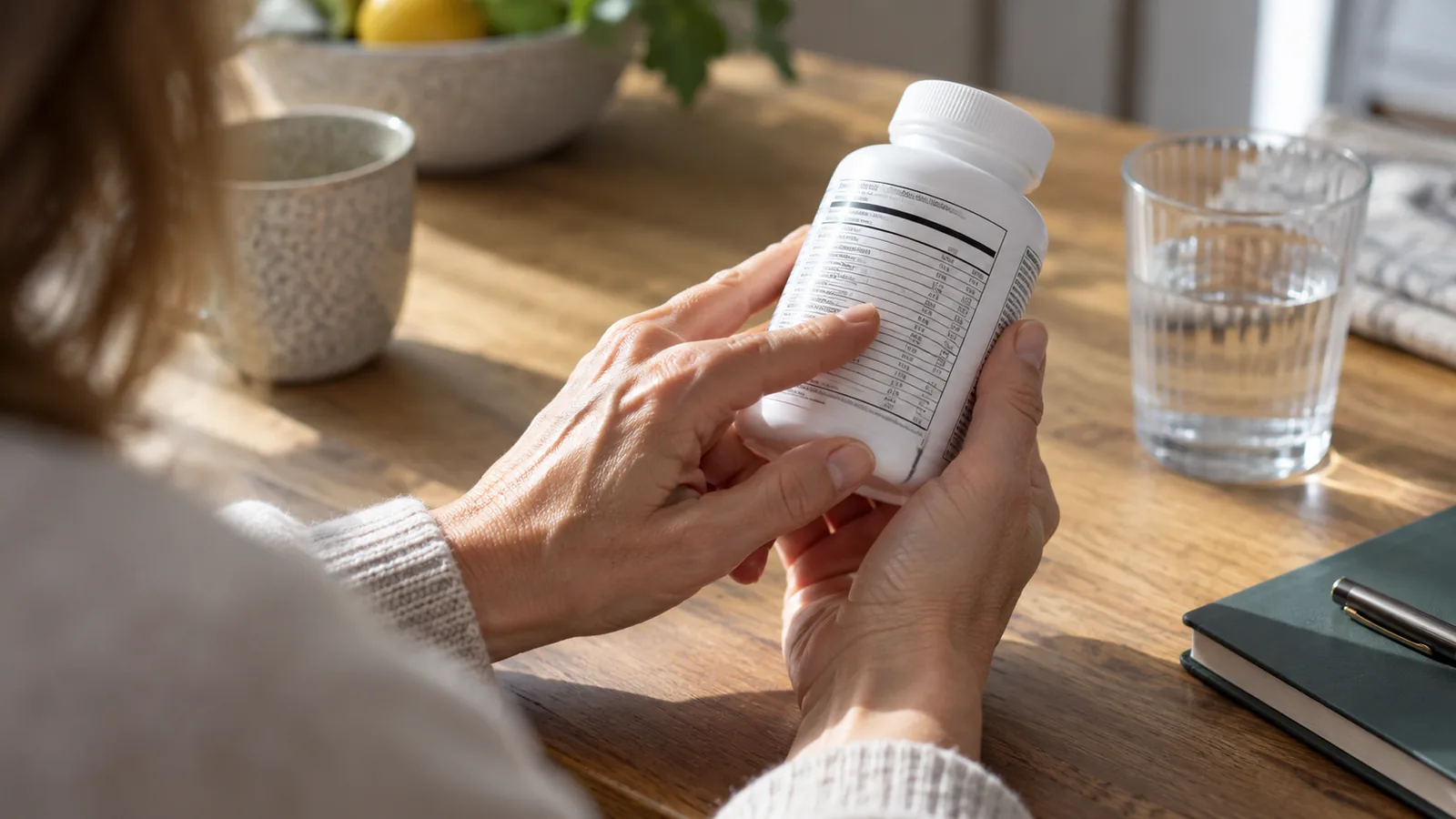
Studies used different amounts, so there's no single dose for everyone. Take what your product says, without doubling it on your own.
If you also eat plenty of soy, you don't need extra capsules: taking more doesn't improve the result.
2. Take them every day at the same time

Isoflavones work with daily use. Taking them alongside something you already do, like your morning coffee, makes them harder to forget.
If you miss a day, carry on as normal the next. Don't take a double dose to catch up.
3. Take them with a meal

With a meal, capsules sit easier on your stomach and become part of your routine. That's what we suggest for Pausive: 2 capsules with breakfast.
4. Give them 8 to 12 weeks

Most studies measured the effect after 8 to 12 weeks, so it's normal not to notice much in the first month.
Note your hot flashes before you start and count them again at 3 months. Our hot flash relief page helps in the meantime.
5. Add soy to your plate too

Tofu, edamame, tempeh and soy milk contain isoflavones naturally, along with good-quality protein.
Food varies from day to day, which is why many women add a supplement. Our guide to the menopause diet has more ideas.
6. Know their side effects

In studies, soy isoflavones are usually well tolerated. The most common complaint is mild stomach upset, like gas or constipation.
Taking them with food is often enough to avoid it. If a complaint doesn't go away, mention it to your doctor.
7. Check first if you take medication

Talk to your doctor before you start if you take thyroid medication, are pregnant or have had a hormone-sensitive condition.
If you're allergic to soy, avoid them. To compare options, see our guide to herbal pills for menopause.
Soy isoflavones or red clover isoflavones
Red clover has isoflavones too, but in a different mix: formononetin and biochanin A, which the body partly turns into soy's.
That's why many menopause formulas combine the two plants. More on our red clover page.
If you already take one of them on its own, check your supplement doesn't repeat it before you add another bottle.
Soy isoflavones FAQs
Do soy isoflavones cause weight gain?
There's no evidence that soy isoflavones make you gain weight. Weight in menopause depends more on sleep, muscle and what you eat.
Are soy isoflavones hormones?
No. They're plant compounds that act like a much gentler estrogen than your own, which is why they're studied in menopause.
Can you take soy isoflavones with levothyroxine?
Often yes, but soy can affect how it's absorbed. Take them a few hours apart from your medication and let your doctor know.
Which foods are high in soy isoflavones?
Tofu, tempeh, edamame, miso and soy milk. Soy sauce and soybean oil contain very little.
How long do soy isoflavones take to work?
Most studies measured the effect after 8 to 12 weeks of daily use. Give them at least that long before you judge them.
Is soy better from food or a supplement?
Food brings protein and fiber too, and a supplement gives you the same amount every day, without counting servings of tofu.
Are soy isoflavones safe?
In studies they're usually well tolerated. Check first if you have a hormone-sensitive condition, are pregnant or take medication.
Can you take soy isoflavones after menopause?
Yes. Most studies were done in postmenopausal women, for hot flashes, vaginal dryness and bones.
Sources
- Taku K et al., Menopause, 2012: across 17 placebo-controlled trials, soy isoflavones cut hot flash frequency by 20.6% and severity by 26.2%.
- Carmignani LO et al., Menopause, 2015: in a 16-week double-blind trial of 60 postmenopausal women, vaginal dryness improved significantly on a soy supplement.
- Taku K et al., Asia Pacific Journal of Clinical Nutrition, 2010: in a meta-analysis of 1,240 menopausal women, soy isoflavone extracts raised spine bone density by 2.38% compared with controls.