What is black cohosh and how to take it
· Pausive Team

A friend swears by it, you've seen it at the pharmacy and it's in almost every menopause formula. What nobody tells you is how to take it well.
If you're looking for what black cohosh is for in menopause, our page on the plant covers it in depth.
What is black cohosh?
It's a plant from North American woodlands, also called Actaea racemosa or Cimicifuga racemosa. The part that's used is its dark, knotted root.
Unlike soy, it contains no estrogen and doesn't act like it. Its compounds seem to work on the part of the brain that controls body temperature.
That's why it counts among the options without hormones. More plants for this stage in our guide to natural estrogen supplements.
Black cohosh benefits for menopause

It's best known for hot flashes. Across 7 placebo-controlled trials, black cohosh preparations improved hot flashes and sweats by 26%.1
When the heat eases, your nights get better too: fewer night sweats mean more hours of unbroken sleep. More on our menopause and sleep page.
And with better nights, your mood tends to follow. Many women reach for it to feel steadier on the days when everything weighs more.
Black cohosh with Pausive

Pausive is the simplest way to add it to your day. Black cohosh works alongside sage and soy isoflavones.
Together they support hot flashes, night sweats and sleep, with no hormones. More on our menopause supplement.
Tips for taking it in this guide
This guide covers 7 tips for taking black cohosh, from which kind to choose to when to check with your doctor:
- The root extract
- The amount on the label
- Every day, with breakfast
- 8 to 12 weeks
- Cool habits alongside
- Its side effects
- When to check first
7 tips for taking black cohosh
1. Choose a root extract
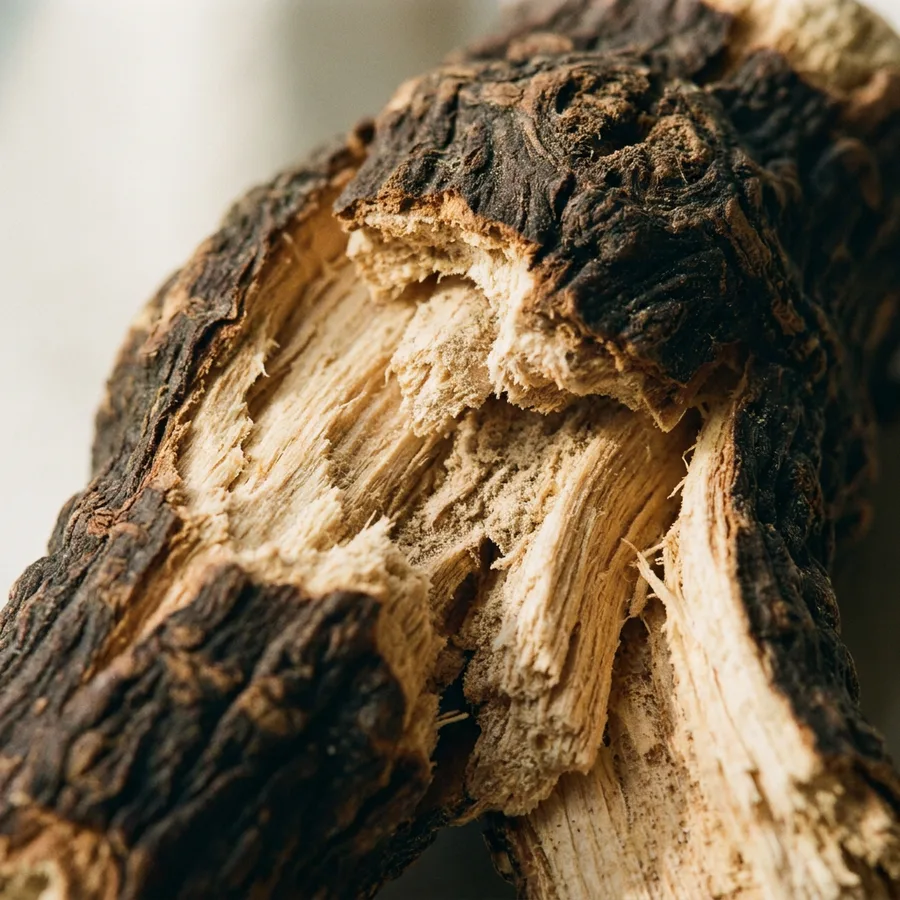
The studies used dried root extract, in capsules or tablets. It's the form you'll find in menopause supplements.
Homeopathic drops carry the plant so diluted that they can't be compared with those studies. Read the label before you buy.
2. Follow the amount on your label

Each product uses a different extract, so there's no single amount for everyone. Take what your label says, without doubling it on your own.
If you already take a formula that includes it, don't add another bottle of black cohosh. Check what you already have at home first.
3. Take it every day with breakfast

Black cohosh works with daily use. If you pair it with something you already do, like breakfast, it's harder to forget.
With food, it sits better in your stomach. If you miss a day, carry on as normal the next: don't take a double dose to catch up.
4. Give it 8 to 12 weeks

In 84 women in their first years after menopause, hot flashes and mood improved against placebo by 4 weeks, and more by 8.2
Note your hot flashes before you start and count them again at 3 months. That way you see the change in your own numbers.
5. Pair it with cool habits

Layers, a cool bedroom and less alcohol and coffee help the heat come less often. They're small changes you notice fast.
Keep cold water and a hand fan in your bag for long days. More ideas on our hot flash relief page.
6. Know its side effects

In studies, black cohosh is usually well tolerated. The most common complaint is a mild upset stomach, which tends to pass when you take it with food.
Across 5 trials of 1,020 women who took it for 3 to 6 months, their liver values didn't change compared with the comparison group.3
7. Check first if you take medication

As with any supplement, talk to your doctor if you take medication, are pregnant or have had a hormone-sensitive condition.
To compare options before you decide, see our guide to herbal pills for menopause.
Black cohosh extract or homeopathic black cohosh
Homeopathy uses the same plant, but diluted until almost none of it is left. It's sold as drops or pellets with numbers like 6C or 30C.
The hot flash studies used root extract, which is what Pausive and most menopause supplements contain.
If you see a C, CH or X next to the name on the box, it's homeopathic. Look for "root extract" on the label.
FAQs on black cohosh
Does black cohosh cause weight gain?
There's no evidence that black cohosh makes you gain weight. Weight in menopause depends more on sleep, muscle and what you eat.
Is black cohosh a hormone?
No. It's a plant that contains no estrogen, and studies suggest it doesn't act like it. That's why it counts among the options without hormones.
How long does black cohosh take to work?
Most studies measured the effect after 8 to 12 weeks of daily use. Some women notice changes within the first month.
Can you take black cohosh with soy isoflavones?
Yes, and many formulas combine them because both are studied for the same symptoms. More in our guide to what soy isoflavones are.
Is black cohosh the same as blue cohosh?
No. They're different plants despite the name. Blue cohosh isn't used for menopause, so check the label says black cohosh.
Can you take black cohosh every day?
Yes, that's how it was used in studies, for 3 to 6 months in a row. Taking it daily is what lets you notice the effect over time.
Can you take black cohosh after menopause?
Yes. It's studied in perimenopause and after your last period, mostly for hot flashes and night sweats.
Who shouldn't take black cohosh?
Check with your doctor first if you're pregnant or breastfeeding, take medication, or have a liver or hormone-sensitive condition.
Sources
- Shams T et al., Alternative Therapies in Health and Medicine, 2010: in a meta-analysis of 7 placebo-controlled trials, black cohosh preparations improved vasomotor symptoms by 26%.
- Mohammad-Alizadeh-Charandabi S et al., Chinese Medicine, 2013: in an 8-week double-blind trial of 84 early postmenopausal women, black cohosh improved vasomotor and mood symptoms against placebo.
- Naser B et al., Menopause, 2011: in a meta-analysis of 5 trials with 1,020 women treated for 3 to 6 months, black cohosh extract had no effect on liver values.